

.png)

.png)

.png)
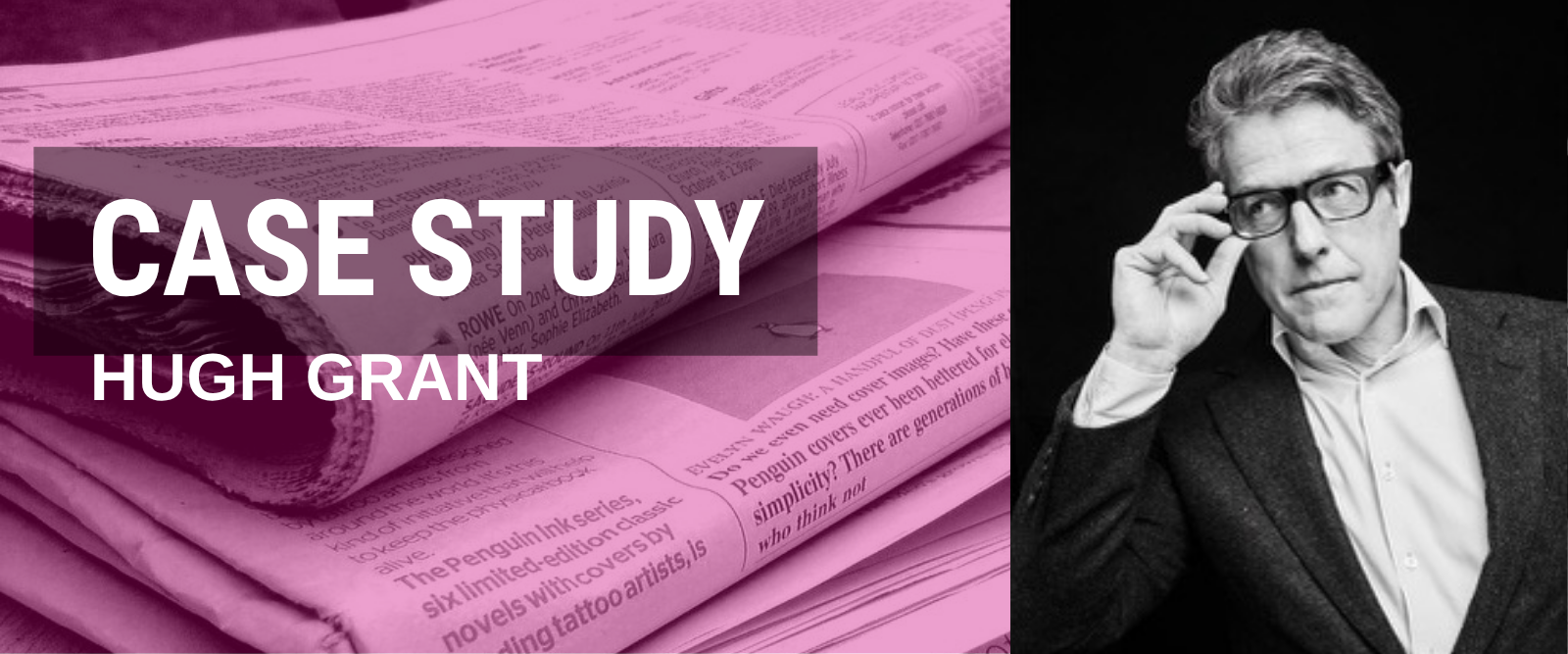
Actor Hugh Grant was one of the first individuals to discover that journalists had hacked his mobile phone and accessed private information without consent. His case helped expose the scale of illegal information-gathering practices within parts of the British press.
Grant later gave evidence to the Leveson Inquiry, describing phone hacking, surveillance, and the failure of press self-regulation to protect victims or prevent abuse.
His experience was not treated as an isolated celebrity issue, but as evidence of systemic wrongdoing that affected many people — including those without public profiles or access to legal support.
Following his own experience of press abuse, Hugh Grant became actively involved in efforts to improve press standards and accountability. He later joined the board of Hacked Off, contributing his time and experience to support wider reform.
His involvement reflects a broader pattern seen across press reform: individuals directly affected by media wrongdoing often go on to advocate for change — not for themselves, but to help protect others from similar harm.
Hugh Grant's case demonstrates how the press will target and attack anyone with the courage to hold them to account.
The unlawful practices exposed in his case were not confined to well known figures — they were part of a broader culture that harmed journalists, victims of crime, bereaved families and others alike.


.png)