

04/02/2020
Hacked Off
Join 71,384 others who are taking action to share the truth & raise standards in the press
Here is an explainer of what a new Government should do to protect the public from press abuse, and how the parties stand - but remember, not all candidates agree with their parties position.
Newspapers and their websites (most of the highest readerships of media websites in the UK except the BBC are newspaper websites) are unregulated. Whilst Ofcom is the independent regulator for broadcast news and television, there is currently no statutory independent equivalent of Ofcom for press.
Instead of a proper regulator, the press has formed an industry-controlled complaints-handler which has just appointed a politician as its next chairman, and another serving politician already sits on the organisation’s rule-setting body.
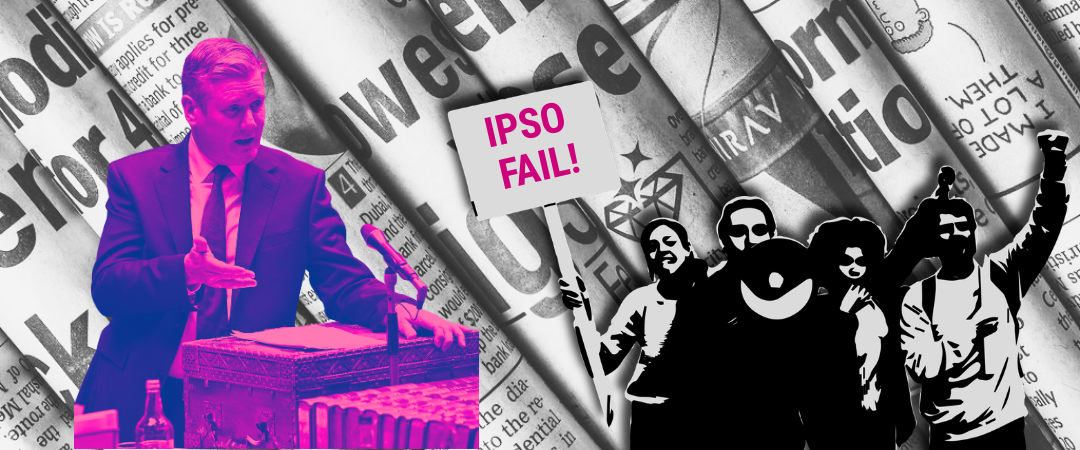
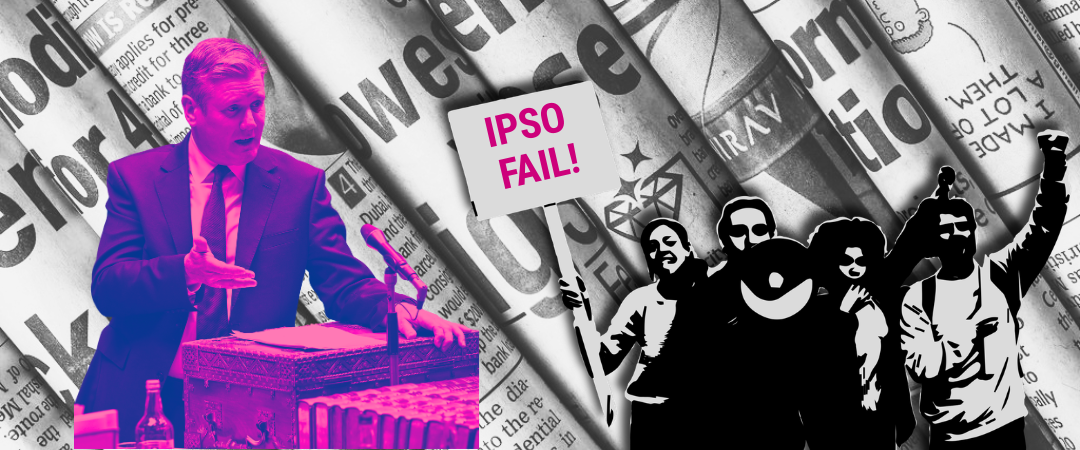
The body which sets rules on what qualifies as racism and sexism for press-controlled complaints-handler IPSO is made up of 100% white and approx. 70% male members.
IPSO has been operating as the press complaints body for most national titles for five years, and in that time it has overseen abusive, discriminatory, inaccurate, harassing and reputation tarnishing reporting - without any change.
There are currently no serious repercussions for the behaviour of the press, no serious inaccuracy remedies and no way to hold it to account. Individuals who cannot afford lawyers face appalling intrusions and libels and have nowhere to turn to.
We are campaigning for parties to commit to ensuring that an independent regulator for all major news publishers both online and in print is implemented, as Leveson recommended, to protect the public and safeguard the freedom of the press.
The Labour, Liberal Democrat and Green parties support independent regulation which protects the public and upholds the freedom of the press, as Leveson recommended.
The Conservative Party is opposed to the Leveson system.
Other parties have not announced in their manifestos where they stand.
There is a huge amount of corruption between politicians, the press and the police which never was investigated because it was left for the second Part of the Leveson inquiry. This inquiry was then cancelled by the government last year.
That’s right: politicians cancelled an Inquiry which would have investigated politicians.
Furthermore, many major media titles including The News of the World, The Sun, The Times, and The Mail have ALL faced significant allegations of illegal activity, which have never been fully investigated.
Part two of the Leveson Inquiry had a huge wave of support and was demanded by the NUJ, free speech campaign Article 19, Sir Brian Leveson himself, and masses of the public through 38 degrees and Avaaz petitions, yet still the Government cancelled it. This would get to the root of corruption in the police and press, including over Hillsborough and Orgreave – where there is clear evidence of corrupt exchanges between police, press and politicians.
The Labour, Liberal Democrat and Green parties support investigating police, press and political corruption as Leveson Part Two would do.
The Conservative Party is opposed to investigating corruption in the police, press and politics by completing Leveson Part Two, and would suppress the second half of the Inquiry.
Other parties have not announced in their manifestos where they stand.
Currently, victims of press abuse who cannot afford to take legal action have no access to justice.This means that ordinary people are most vulnerable to reputational damage and harassment.
We know from Leveson evidence that some news publishers ask themselves: can this person afford to sue? Before considering whether to run a potentially libellous smear.
We call on parties to commit to introducing access to justice mechanisms, so that justice against newspaper groups does not become the preserve of the rich.
The Conservative Party have stated they oppose the costs-shifting access to justice mechanism recommended by the Leveson Report (Part One), and will dismantle it.
Other parties have not announced in their manifestos where they stand.
Hacked Off is funded by supporters, not newspaper owners. Help us take this to Parliament: give £10 a month.
Give £10 a monthBy submitting your details you agree to receive email updates about the campaign. We will always keep your data safe and you may unsubscribe at any time.