News

Trinity Mirror finally admits what we all knew, but will anything change?

25/09/2014

Brian Cathcart

Newspaper
✕ Press claim

✓ The truth

Reach
Up to
people misled
Help us fight back

Join 71,384 others who are taking action to share the truth & raise standards in the press

1. Share the truth
Post this rebuttal on social media
2. Fund the fightback
Help us challenge more stories like this
Donate
3. Tell your MP
Send a ready-written email in 30 seconds
Email your MP

by Brian Cathcart

Perhaps the sleaziest aspect of Trinity Mirror’s phone hacking confession is the emphasis placed on the idea that the offences took place ‘many years ago’. For while it is true that we have had to wait years for confirmation that reporters at the company’s papers broke the law in this way, that delay was in large measure the fault of the company’s management.

For at least five years the public has wanted to know whether phone hacking took place at any other national newspapers besides the News of the World, and for at least five years the finger of suspicion has pointed at the Mirror papers.

One former journalist at the Daily Mirror said hacking was considered ‘a bog-standard tool’. The journalist Nick Davies has quoted former reporters at the group as saying it was openly taught to staff on all three Mirror titles. Three former editors in the groups were arrested by police investigating hacking, though they were not charged.

Yet all that time the management insisted that the suspicions were unfounded. All that time it claimed its reporters operated entirely within the law. And all that time it failed to give the public an accurate picture of what had been going on in the company.

Now Trinity Mirror has admitted the truth. It is just over a year after a former Sunday Mirror journalist, Dan Evans, pleaded guilty to phone-hacking and 10 months after he confessed all in open court, the company has confessed that its employees hacked four people and that it has also settled claims against it by six others.

As Roy Greenslade writes, the company’s response to the hacking affair has been nothing less than scandalous. And no doubt the management will have many awkward questions to answer from shareholders who were sold the same line as the public.

The man in the spotlight here is Paul Vickers, Trinity Mirror secretary and Group Legal Direcctor. In July 2011 Vickers was publicly tasked with investigating standards at the company following the hacking allegations.

This proved to be an extraordinary exercise, as he described it to the Leveson Inquiry . He wrote to 43 senior executives at the group’s national and regional titles and asked them whether they had hacked or commissioned hacking, or knew about hacking by their staff. They all said no, and on the basis of this ‘review‘ the public was told all was well.

As investigative techniques go, it could hardly be more feeble, yet this was the company’s fig-leaf for years.

And Vickers, it will be no surprise, is the newspaper industry executive responsible for overseeing the development and establishment of IPSO, the big newspaper companies’ new sham regulator, intended to replace the discredited Press Complaints Commission. He heads up the industry-only body that funds and controls IPSO. He then led the three Mirror group titles into IPSO, and also its many regional papers.

Having belatedly admitted hacking, however, Trinity Mirror urgently needs to rebuild public trust. One important step in the right direction would be to ensure that it its papers participate in a self-regulatory system along the lines recommended by Lord Justice Leveson and endorsed by all parties in Parliament in the form of the Royal Charter on press self-regulation.

Hacked Off is funded by supporters, not newspaper owners. Help us take this to Parliament: give £10 a month.

Give £10 a month

Download the full report:

Download report

Queries: campaign@hackinginquiry.org

related Posts

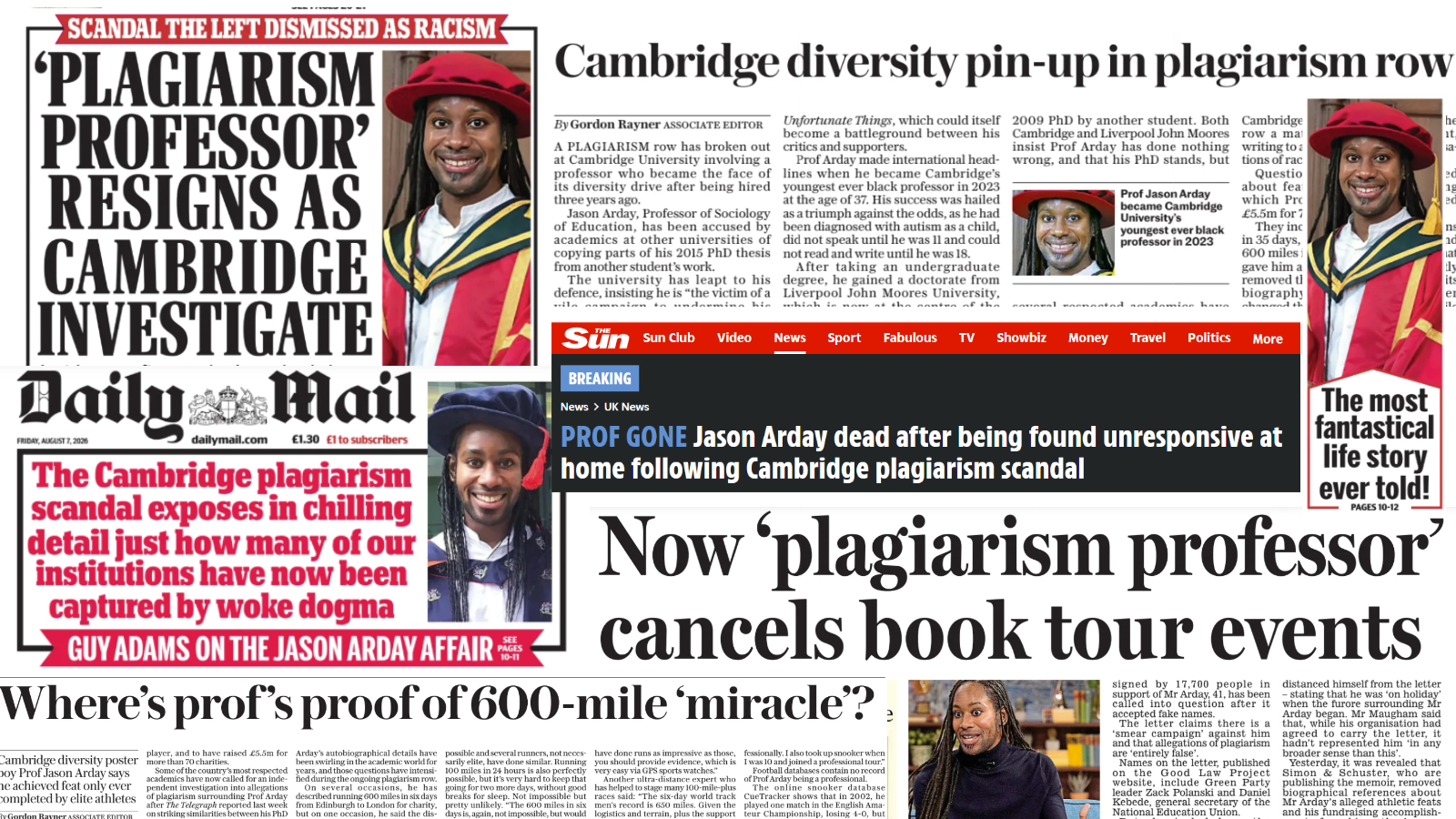
Coverage of Professor Arday was not legitimate: the letter The Times refused to publish
Guest blog: Professor Paul Wragg replies to the letter published in The Times on 25 August defending the press coverage of Professor Jason Arday. The Times declined to publish his reply. We publish it here in full.
8/28/26
News
Defensive, evasive & hypocritical: The press reaction to the death of Jason Arday
The reaction of national newspapers to the death of Professor Jason Arday has exposed a brittle defensiveness at the heart of the press, and a determination to remain outside any meaningful accountability.
8/26/26
News
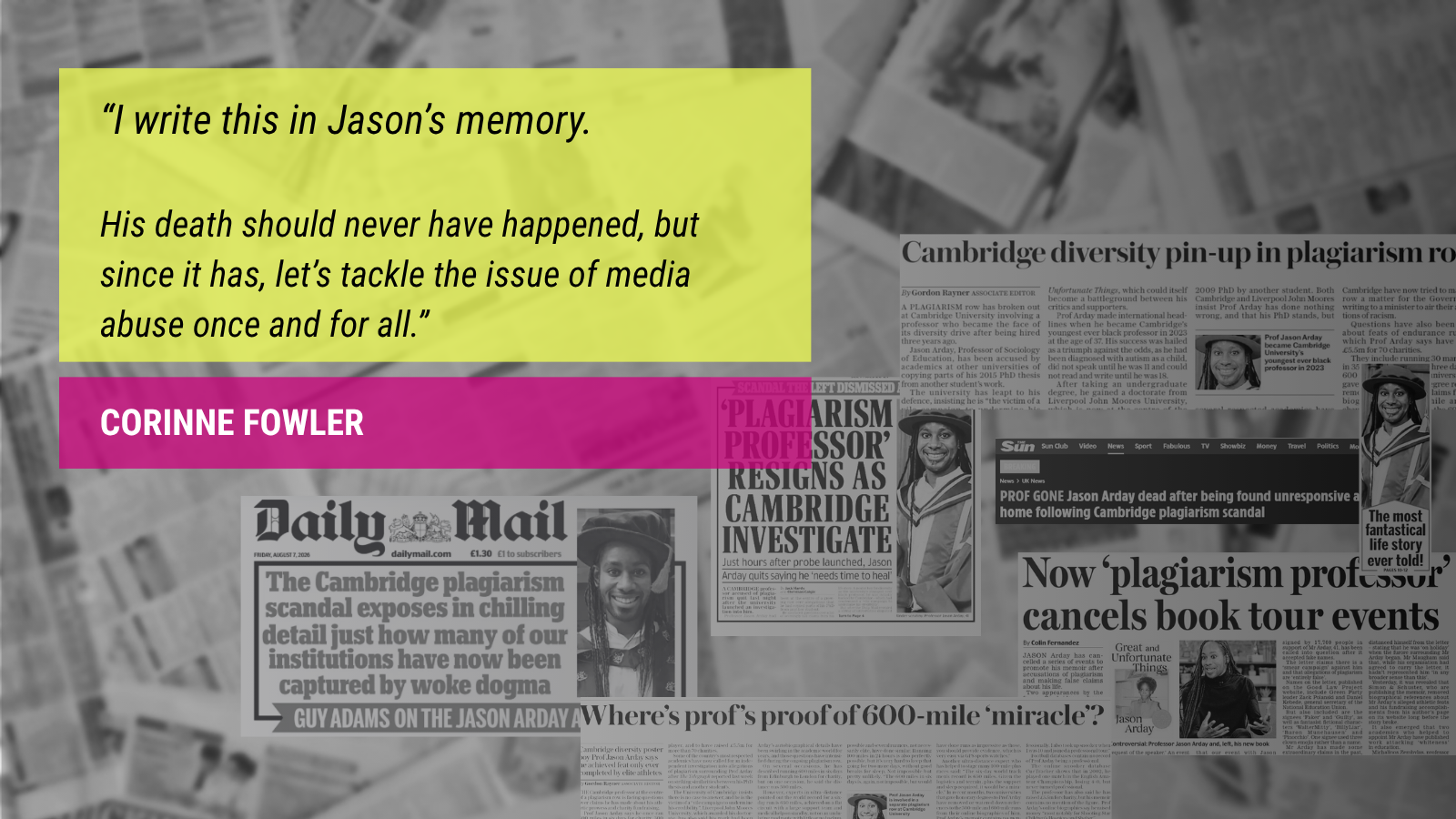
When media abuse of academics becomes the norm in HE
Following the death of Jason Arday, Corinne Fowler writes on the toll of media abuse on academics and what universities must do to protect their staff.
8/19/26
News
IPSO ties itself in knots over Telegraph complaint
Media lawyer Jonathan Coad complained to IPSO about a Telegraph article claiming Hacked Off wants "state control" of the press. IPSO's response contradicted itself within the space of a few paragraphs.
8/14/26
News